
.jpg&w=3840&q=75&dpl=dpl_HqrNc3JY3JGjDDKkjxHMDyCembfJ)
If you’ve lived in Tampa for any length of time, you already know one thing: the air here carries weight.
Step outside in July and you can feel it. Moisture clings to skin. Windows fog. Wood swells. Even doors sometimes stick in their frames.
Now imagine what that same humidity does inside your kitchen.
At Cabinets & Remodeling Depot, this is one of the most common concerns homeowners raise when planning a remodel:
“Will Tampa’s heat and humidity damage my cabinets?”
The short answer is yes – they can.
But with the right materials, design choices, and installation techniques, they don’t have to.
Let’s break down why Florida’s climate matters so much and how to build cabinetry that withstands it.
Why Tampa’s Climate Is Tough on Cabinets
Tampa’s subtropical climate brings high humidity levels for much of the year. Even inside climate-controlled homes, moisture levels fluctuate more than many homeowners realize.
Wood is a natural material. It expands when it absorbs moisture and contracts when it dries. These subtle shifts may seem minor, but over time they can lead to:
Warping
Cracking
Joint separation
Peeling finishes
Misaligned doors
One homeowner we worked with in South Tampa noticed her cabinet doors no longer closed evenly during summer months. The issue wasn’t faulty hinges, it was seasonal expansion.
Humidity doesn’t ruin cabinets overnight. It stresses them gradually.
How Heat Compounds the Problem
Heat accelerates moisture absorption and evaporation cycles. Tampa kitchens often face additional stressors:
Steam from cooking
Dishwashers releasing hot moisture
Frequent air conditioning cycling
Proximity to exterior walls exposed to sun
When materials repeatedly expand and contract, structural integrity can weaken.
At Cabinets & Remodeling Depot, we evaluate environmental exposure when designing custom cabinets in Tampa. Placement, ventilation, and material choice matter far more in Florida than in drier climates.
Not All Cabinet Materials Respond the Same
The key to durability in Tampa isn’t avoiding wood, it’s choosing the right construction methods.
Solid Wood
Solid hardwood cabinets are beautiful and long-lasting, but they require proper sealing and finishing. Poorly sealed wood absorbs moisture quickly.
However, high-quality hardwood with proper kiln drying and finishing performs exceptionally well when professionally installed.
MDF (Medium Density Fiberboard)
MDF is more dimensionally stable than some solid woods, meaning it expands less with humidity. It’s commonly used in painted cabinet doors.
But low-quality MDF can swell if exposed to prolonged moisture especially near sinks.
Plywood Construction
High-grade plywood is often the preferred cabinet box material in Florida. It offers strength and better resistance to moisture compared to particleboard.
At Cabinets & Remodeling Depot, we guide homeowners through material comparisons specific to Tampa’s climate. The right combination of materials creates resilience.
The Hidden Danger of Cheap Cabinets in Humid Climates
Earlier we discussed why some cabinets seem unusually inexpensive.
Here’s the connection.
Lower-cost cabinets often use particleboard or low-grade materials with thin veneers. In a dry climate, they may perform adequately. In Tampa’s humidity? They deteriorate faster.
Common issues include:
Edge swelling
Delamination
Sagging shelves
Mold risk in extreme cases
One client came to our Valrico showroom after replacing big-box cabinets twice in under eight years. The cabinets looked fine at first until Florida weather took its toll.
Investing in quality materials upfront often reduces long-term costs.
Moisture Hotspots in Tampa Kitchens
Not all areas of the kitchen experience equal exposure.
Pay special attention to:
Sink base cabinets
Areas near exterior walls
Cabinets above stoves
Under-counter dishwasher panels
Garage-adjacent kitchens
Proper sealing, waterproof finishes, and smart ventilation design significantly reduce risk.
At Cabinets & Remodeling Depot, installation isn’t just aesthetic, it’s strategic.
The Role of Finishes and Sealants
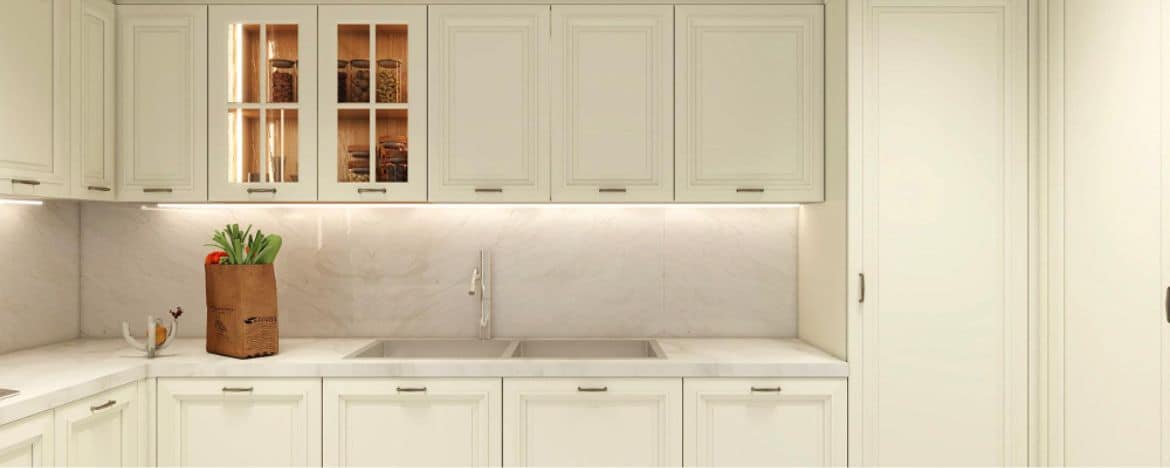
Finish quality matters as much as material selection.
Professional-grade sealants protect wood from absorbing moisture. Painted finishes require proper priming and curing to resist bubbling or peeling.
In Florida homes, we often recommend:
Multi-layer sealing systems
Moisture-resistant paints
UV-resistant finishes for sun-exposed kitchens
The goal isn’t to eliminate expansion, that’s impossible with natural materials. The goal is to control it.
Can Air Conditioning Solve the Problem?
Many homeowners assume air conditioning completely neutralizes humidity.
It helps , but it doesn’t eliminate seasonal fluctuation.
Indoor humidity in Tampa typically ranges between 45–60% even with AC. During storm seasons, it may spike higher.
A whole-home dehumidifier can improve stability, especially in waterfront or coastal properties.
Still, cabinetry should be built with climate in mind, not just climate control.
Signs Your Cabinets May Be Humidity-Stressed
If you already have cabinets installed, watch for:
Doors that no longer align
Swollen edges along cabinet bases
Peeling veneer
Hairline cracks in paint
Musty smells inside cabinets
These signs often appear gradually.
An inspection at Cabinets & Remodeling Depot can help determine whether minor adjustments or full replacement is necessary.
Designing for Tampa From the Start
Custom cabinetry offers an advantage: it can be designed specifically for Florida conditions.
When building Tampa kitchen cabinets, we consider:
Ventilation spacing
Cabinet box material strength
Humidity-resistant hardware
Proper installation clearance
Moisture-barrier sealants
Stock cabinets are built generically. Custom cabinets are built intentionally.
In climates like Tampa’s, intentional design matters.
A Real-World Perspective
We recently completed a kitchen remodel in Westchase where the previous cabinets showed severe swelling beneath the sink.
The homeowner assumed a plumbing leak had caused the damage. Inspection revealed no leaks, just years of moisture exposure combined with lower-grade materials.
After installing moisture-resistant custom cabinetry with reinforced plywood boxes and upgraded sealing, the space not only looked better, it functioned better.
Florida kitchens demand durability.
Short Answer Q & A
Q: Does Tampa humidity damage kitchen cabinets?
A: Yes, prolonged exposure to high humidity can cause expansion, warping, and finish deterioration if cabinets are not built with moisture-resistant materials.
Q: Are custom cabinets better for Florida homes?
A: Custom cabinets allow for climate-specific material selection and installation methods, making them more durable in Tampa’s conditions.
Q: Is MDF safe to use in humid kitchens?
A: High-quality MDF with proper sealing performs well, but low-grade MDF may swell in moisture-prone areas.
Q: How can I protect my cabinets from humidity?
A: Ensure proper ventilation, maintain indoor humidity levels, and choose professionally sealed materials.
Q: Should I replace cabinets if they swell in summer?
A: Not always. Minor seasonal expansion is normal, but persistent warping may require professional evaluation.
Final Thoughts: Climate Isn’t the Enemy – Poor Preparation Is
Tampa’s heat and humidity are not temporary conditions. They’re environmental constants.
Ignoring them during kitchen remodeling leads to preventable issues.
At Cabinets & Remodeling Depot, our focus isn’t just aesthetics. It’s performance. Every material, finish, and installation decision is made with Florida living in mind.
Cabinets are an investment. In Tampa, that investment must account for climate realities.
When designed correctly, your kitchen won’t just survive Florida weather, it will thrive in it.